
One of the most important and valuable things an inventor / prospective patent applicant can do when working on an idea is to see if it’s already out there in the public domain. If so, it might not be possible to get a (valid) patent for the idea.
As well as being a patent attorney, I (Iain Russell, founder of Russell IP) am also an inventor. I love problem-spotting and problem-solving and regularly come up with new ideas. In this series of short articles, I’ll share a story of how I managed to ‘knock out’ one such idea, including several refinements of the initial idea, through some quick and basic “prior art” searching. While it’s always disappointing to find out that you weren’t the first person to come up with an idea, it can help avoid wasting time and money on a lost cause and can actually trigger new innovation, as I’ll explain in these articles.
So, what was my idea?
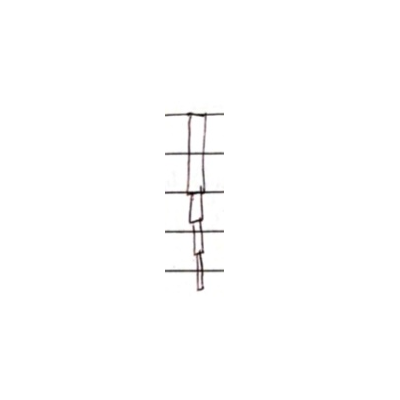
Well, I was getting frustrated having to find the right-sized hex key (also known as an Allen key – Wikipedia link here) for a particular socket. So I thought: wouldn’t it be great if there were some sort of telescopic hex key that could work with different-sized sockets. There would be a small central / core key and a series of progressively larger shells that could be pushed down around the central one. This is the exact sketch I drew, straight from my notepad (please forgive my terrible drawing skills):

Before getting too carried away, I did a quick patent search around telescopic hex keys and promptly came across US Patent No. 2,735,325 (Espacenet link here) filed back in 1954. Here are some of the drawings from that patent:
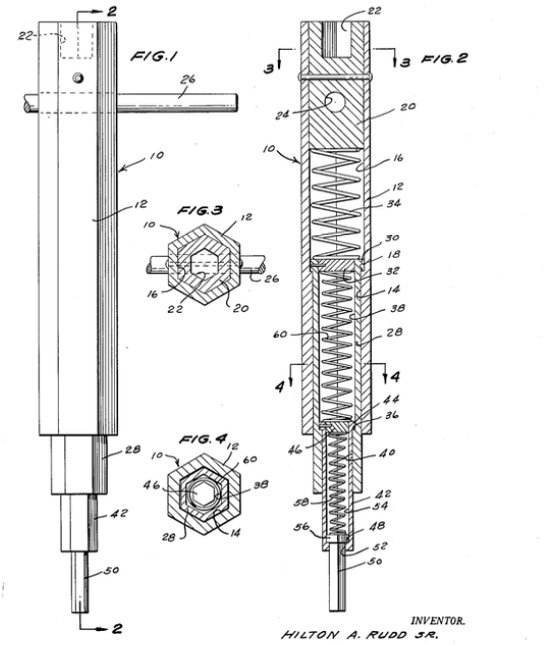
It described exactly what I’d come up with!
In the part 2 (link here) of this series of short articles, I’ll explain how I went back to the drawing board and what I did next….
If you’re a patent-savvy music tech business looking for patent help, get in touch with Russell IP here!
The information above is for general interest and information only and does not constitute legal advice.